
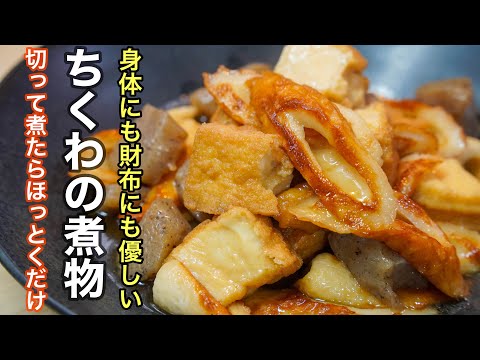
Ingredients
Main Ingredients (2 servings)
Seasonings
Steps
- First, tear the konjac jelly (approx. 180g) by hand. (Secret Tip!) Tearing by hand creates a rough surface, allowing the flavors to cling better.
- Add a pinch of salt to the torn konjac jelly and rub it in firmly. (Secret Tip!) Salting and rubbing removes impurities and bitterness along with moisture, making it easier for the flavors to soak in.
- Once it's rubbed until glossy, let it sit for about 10 minutes.
- Wrap thick fried tofu (150g) in a damp paper towel and microwave for 1 minute. (Secret Tip!) Microwaving brings the oil to the surface, which the paper towel absorbs, removing excess oil.
- The microwaved thick fried tofu will be hot, so let it cool down in the paper towel until you can comfortably touch it.
- In a bowl, combine dashi stock 400cc, light soy sauce 2 tbsp, mirin (sweet rice wine) 3 tbsp, and sugar 2 tsp. Stir well to mix the seasoning. (Secret Tip!) If you don't have time to make dashi, you can substitute 1 tsp of dashi granules with 400cc of water.
- Cut the chikuwa (fish cake) 4 pieces diagonally into bite-sized pieces.
- Tear the cooled thick fried tofu into bite-sized pieces. (Secret Tip!) Tearing them into slightly smaller pieces allows the simmering liquid to burst out more when you eat them, enhancing the deliciousness.
- If there's excess water from the salted and rubbed konjac, rinse it under running water.
- Drain the konjac thoroughly in a colander.
- Heat a frying pan over low heat. Once warm, add sesame oil 1 tbsp. (Secret Tip!) It's best to make simmered dishes in a wide, shallow frying pan.
- Add the drained konjac and the cut chikuwa to the frying pan and sauté for about 5 minutes. (Secret Tip!) Evaporating the konjac's moisture and browning the chikuwa will help them absorb flavor better. They're ready when the konjac turns pale and the sizzling sound diminishes.
- In the cleared space in the pan, add the torn thick fried tofu.
- Pour the prepared seasoning mixture into the frying pan.
- Bring to a gentle simmer over low heat.
- Once it's simmering in the center, cover with a piece of parchment paper as a lid. (Secret Tip!) You can poke one hole in the center, but making about three holes will allow the simmering liquid to circulate from the top more effectively.
- Pour some of the simmering liquid over the parchment paper lid to distribute the flavor.
- Reduce the heat to the lowest setting and let it simmer gently for 20 minutes to allow the ingredients to absorb the flavors.
- After 20 minutes, turn off the heat and remove the parchment paper lid. (Secret Tip!) Squeeze the parchment paper to wring out any remaining delicious broth before discarding it to avoid waste.
- Plate the simmered chikuwa. (Secret Tip!) It tastes great as a make-ahead side dish and remains delicious even when cold, having fully absorbed the broth.
🌾 Recommended Rice for This Dish
※HowToCook.JPが料理の特徴に合わせて選定しています。動画内でシェフが推薦したものではありません。
* Contains affiliate links
*This article contains Amazon affiliate links. We may earn a commission on qualifying purchases.




🍷 編集部おすすめペアリング
※HowToCook.JP編集部による提案です。動画内でシェフが推薦したものではありません。
シャトー・メルシャンの甲州を代表する銘柄きいろ香。繊細な和柑橘と上品なミネラル感。和食全般・刺身・天ぷらにぴったり
8–10℃ Amazonで探す →ニュージーランド マールボロの代名詞クラウディー・ベイ。青草・柑橘・ハーブの爽やかな香り。サラダ・山羊チーズ・シーフードに最適
8–11℃ Amazonで探す →吟醸香と米の旨みが調和した飲みやすい一本。焼き魚・煮魚・和風パスタなど和食全般に合わせやすい
10–15℃(冷酒・花冷え) Amazonで探す →米と米麹のみで醸したコク豊かな純米酒。燗にすることで旨みがさらに開花し、煮物・焼き鳥・濃い味の惣菜と絶妙にマッチ
15–55℃(常温〜熱燗) Amazonで探す →火入れをしない生酒ならではの溌剌とした風味とフレッシュな香り。刺身・カルパッチョ・夏野菜の浅漬けなど、素材の鮮度を活かした料理に最適
5–10℃(雪冷え〜花冷え) Amazonで探す →国産ホップを使ったフレッシュで繊細な香り。アルコール度数は低めで飲みやすい。和食・刺身・冷奴と驚くほどよく合う
6–10℃ Amazonで探す →日本でもっとも親しまれるピルスナースタイル。キリッとした炭酸と軽い苦みが特徴。揚げ物・焼き鳥・餃子など炭酸と合わせたい料理全般に
4–7℃ Amazonで探す →クリアな黄金色と上品な苦みが特徴のプレミアムピルスナー。食事を選ばない汎用性の高さが魅力。和食全般・刺身・寿司に
4–7℃ Amazonで探す →緑茶のカテキンが和食の旨みを引き立て、ほうじ茶は香ばしさで揚げ物・甘い料理のバランスを整える
冷・ホット(4–8℃ / 70–90℃) Amazonで探す →⚠️ お酒に関する注意事項
20歳未満の飲酒は法律で禁止されています。飲酒運転は法律で禁止されています。
妊娠中や授乳期の飲酒は、胎児・乳児の発育に影響するおそれがあります。お酒は適量を。