

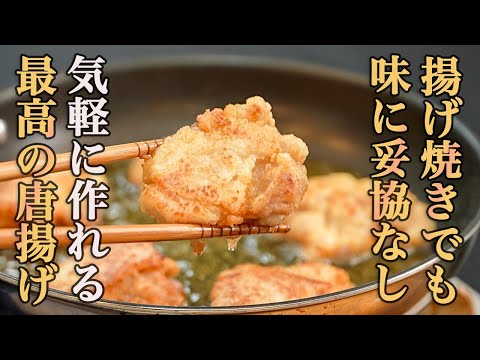
Easy 'Dashi' fried chicken using reduced-salt Hondashi, perfect for making after work. Pan-fried to a juicy finish, the savory bonito flavor fills your mouth. This is a foolproof, best recipe.
Ingredients
Main Ingredients (2 servings)
- Chicken Thigh 1 pc (300g)
- Potato Starch (for coating) (to taste)
- Vegetable Oil (for frying) (to taste)
Seasonings
- [A] Ginger (grated) 10g
- [A] Light Soy Sauce 1 tbsp
- [A] Mirin (Sweet Rice Wine) 1 tbsp
- [A] Potato Starch 2 tsp
- [A] Reduced-Salt Hondashi 1.5 tsp
Steps
- Grate 10g of ginger into a large bowl.
- Add 1 tbsp Light Soy Sauce, 1 tbsp Mirin (Sweet Rice Wine), 2 tsp Potato Starch, and 1.5 tsp Reduced-Salt Hondashi to the bowl with grated ginger and mix briefly to create the marinade. [Key Tip!] A thin coating layer made with a small amount of potato starch helps prevent juice from escaping.
- Pat the chicken thigh dry thoroughly with paper towels. [Key Tip!] Removing moisture helps reduce odor and allows the marinade to penetrate better.
- Cut the tendons and thick parts of the chicken thigh with the tip of a knife.
- Check for any bones or cartilage by touching the meat and remove them if found.
- Cut the chicken thigh into 6 large pieces. [Key Tip!] Cutting into larger pieces increases moisture retention, resulting in a juicier finish.
- Place the cut chicken into the bowl with the marinade and mix thoroughly by hand, massaging it in.
- Let the marinated chicken sit at room temperature for 10 minutes. [Key Tip!] Cold chicken can lead to uneven cooking, so bringing it to room temperature ensures it cooks evenly.
- Prepare a tray and rack (or a plate lined with paper towels) for removing the fried chicken, and a kitchen timer.
- Pour Vegetable Oil into a frying pan, enough to submerge half of the chicken pieces. [Key Tip!] Insufficient oil can lead to unstable temperatures, making it harder to cook through and preventing crispy sides.
- Put a generous amount of Potato Starch into a tray. [Key Tip!] Using too little potato starch can result in lumps or excess coating, making the chicken soggy. Use plenty!
- Using tongs or chopsticks, grab the chicken pieces and, while stretching the skin side, coat them thoroughly with the abundant potato starch.
- Once coated with potato starch, tap off any excess. [Key Tip!] A thick coating that is then well-tapped off ensures a crispy, not soggy, finish.
- Arrange the chicken pieces, with the skin side down, into the frying pan with cold oil after tapping off excess coating.
- Place the frying pan with the chicken pieces in cold oil over low heat. [Key Tip!] Starting with cold oil and gradually heating allows the chicken to cook through to the center while retaining its juiciness.
- Once small bubbles start to appear around the chicken, continue to fry over low heat for 4 minutes.
- After 2 minutes of the 4-minute frying time, flip the pieces over once. [Key Tip!] Frying the skin side more intensely allows moisture to escape, resulting in a crispier texture.
- With 1 minute remaining, flip again to fry the skin side.
- After 4 minutes, increase the heat to medium and flip the pieces for about 1 to 1.5 minutes to achieve a crispy exterior and a nice golden brown color. [Key Tip!] The double-frying effect creates a crispy outside and a juicy inside.
- Once the surface is nicely browned, turn off the heat, drain the oil, and transfer to the tray.
- Let the fried chicken rest on the tray for 5 minutes, using residual heat. [Key Tip!] Resting the chicken stabilizes the juices and allows it to finish cooking through. This seals in the juices, making it very succulent.
- Serve the rested fried chicken after 5 minutes for a completed dish.


