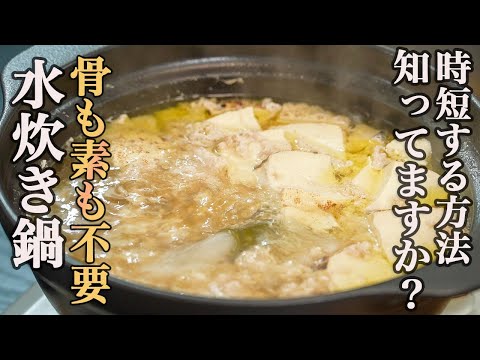
A nutritious Chanko Nabe recipe that's easy to make with leftover ingredients from your fridge. The exceptional soup is sure to be addictive from the first bite. Please try this exquisite hot pot that will warm both your body and soul.
Ingredients
Main Ingredients (2 servings)
- Napa Cabbage 300-400g
- Cabbage 200g
- Maitake Mushrooms 1/2 pack
- Enoki Mushrooms 1/2 pack
- Grilled Chikuwa (Fish Cake) 1 pack
- Aburaage (Fried Tofu Pouch) 2 pieces
- Ground Chicken 200g
- Green Onion 1/5 stalk
- Egg Yolk 1
- Potato Starch 1 tsp
- Grated Ginger 10g
- Grated Garlic 3 cloves (20g)
- Kombu (Kelp) 10g
Seasonings
- [A] Soy Sauce 1 tbsp
- [B] Miso 4 tbsp
- [B] Cooking Sake (Rice Wine) 100ml
- [B] Mirin (Sweet Rice Wine) 50ml
- [B] Chicken Bouillon Paste 1 tsp
- [B] Soy Sauce 1 tbsp
Steps
- In a small pot, add 800ml water and 10g kombu.
- Gently warm the pot over low heat. [Key Tip!] Kombu's umami is best extracted at around 60°C (140°F), so slowly increasing the temperature will yield a delicious broth.
- Once warmed, reduce to low heat and steep the kombu for 10 minutes to draw out the dashi.
- While the soup base is steeping, grate 3 cloves garlic (20g) and 10g ginger.
- After 10 minutes, turn off the heat and remove the kombu from the pot.
- Dissolve 4 tbsp miso into the pot. [Key Tip!] Combining two types of miso will deepen the flavor.
- Continue by adding 100ml cooking sake, 50ml mirin, 1 tsp chicken bouillon paste, and 1 tbsp soy sauce.
- Add the grated garlic and ginger, and mix everything well to complete the soup base.
- Remove the completed soup base from the heat temporarily.
- Make diagonal cuts into the core of 300-400g napa cabbage and cut off the core.
- Tear the napa cabbage leaves by hand, then slice them thinly against the grain. Cut the leafy parts into large, bite-sized pieces. [Key Tip!] Slicing thinly allows the cabbage's sweetness to dissolve more easily into the soup.
- Add the cut napa cabbage to the pot.
- Cut 200g cabbage similarly, removing the core and cutting into easy-to-eat pieces. Cut the leafy parts into large chunks.
- Add the cut cabbage to the pot.
- Finely chop 1/5 stalk green onion. Make diagonal cuts without fully separating, then make similar cuts on the opposite side before finely chopping from the end.
- Place the minced green onion in a small bowl or wrap it in plastic wrap.
- Tear 1/2 pack maitake mushrooms and 1/2 pack enoki mushrooms into bite-sized pieces by hand.
- Add the separated maitake and enoki mushrooms to the pot. [Key Tip!] Freezing mushrooms enhances their sweetness and helps retain their umami.
- Cut 1 pack grilled chikuwa into bite-sized pieces. [Key Tip!] Grilled chikuwa absorbs broth well in stews and hot pots, and also releases umami.
- Add the cut grilled chikuwa to the pot.
- Cut 2 pieces aburaage into large bite-sized pieces. [Key Tip!] If you find the fried taste of aburaage strong, you can remove excess oil by wrapping it in a damp paper towel and microwaving for 30 seconds.
- Add the cut aburaage to the pot.
- In a bowl, combine 200g ground chicken, [A] 1 tbsp soy sauce, 1 egg yolk, [Main Ingredients] 10g grated ginger, and 1 tsp potato starch.
- Wearing gloves, mix the ground chicken thoroughly until it becomes sticky.
- Once sticky, add the chopped green onion and mix briefly. [Key Tip!] Adding green onion at the end and not overmixing preserves its fresh flavor.
- Once the chicken meatballs are prepared, refrigerate them until ready to add to the pot.
- Pour the prepared hot pot soup over the ingredients in the pot, distributing it evenly.
- Once all the soup is added, bring to a boil over medium heat and cover. [Key Tip!] Covering the pot traps heat and ensures all vegetables cook thoroughly.
- When the vegetables have softened, remove the lid, gently loosen the ingredients to create space, and drop in the chicken meatballs using a spoon, shaping them as you go.
- Once all the chicken meatballs are added, cover the pot again, reduce heat to low, and simmer for 10 minutes. Your heartwarming Chanko Nabe is complete! For the finale, we recommend using ramen noodles specifically designed for hot pots, as they can be cooked directly in the stew. [Key Tip!] Fresh, standard ramen noodles can make the broth too thick and cloudy due to the wheat flour; hot pot noodles are the best choice.